Linked List Random Node
Problem statement
Given a singly linked list, return a random node's value from the linked list. Each node must have the same probability of being chosen.
Implement the Solution class:
Solution(ListNode head)Initializes the object with the head of the singly-linked listhead.int getRandom()Chooses a node randomly from the list and returns its value. All the nodes of the list should be equally likely to be chosen.
Example 1:
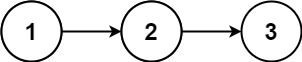
Input["Solution", "getRandom", "getRandom", "getRandom", "getRandom", "getRandom"][[[1, 2, 3]], [], [], [], [], []]Output[null, 1, 3, 2, 2, 3]ExplanationSolution solution = new Solution([1, 2, 3]);solution.getRandom(); // return 1solution.getRandom(); // return 3solution.getRandom(); // return 2solution.getRandom(); // return 2solution.getRandom(); // return 3// getRandom() should return either 1, 2, or 3 randomly. Each element should have equal probability of returning.
Constraints:
- The number of nodes in the linked list will be in the range
[1, 104]. -104 <= Node.val <= 104- At most
104calls will be made togetRandom.
Follow up:
- What if the linked list is extremely large and its length is unknown to you?
- Could you solve this efficiently without using extra space?
My solution
/**
 * Definition for singly-linked list.
 * function ListNode(val, next) {
 *     this.val = (val===undefined ? 0 : val)
 *     this.next = (next===undefined ? null : next)
 * }
 */
/**
 * @param {ListNode} head
 */
var Solution = function(head) {
    this.arr = [];
    while (head) {
        this.arr.push(head)
        head = head.next;
    }

    // console.log(this.arr)
};

/**
 * @return {number}
 */
Solution.prototype.getRandom = function() {
    let index = Math.floor(Math.random() * this.arr.length)
    // console.log(index, this.arr[index])
    return this.arr[index].val
};

/**
 * Your Solution object will be instantiated and called as such:
 * var obj = new Solution(head)
 * var param_1 = obj.getRandom()
 */